
“Looking back to look forward”
Bodil Friele
28. november – 20 desember
Puncturing Pretension
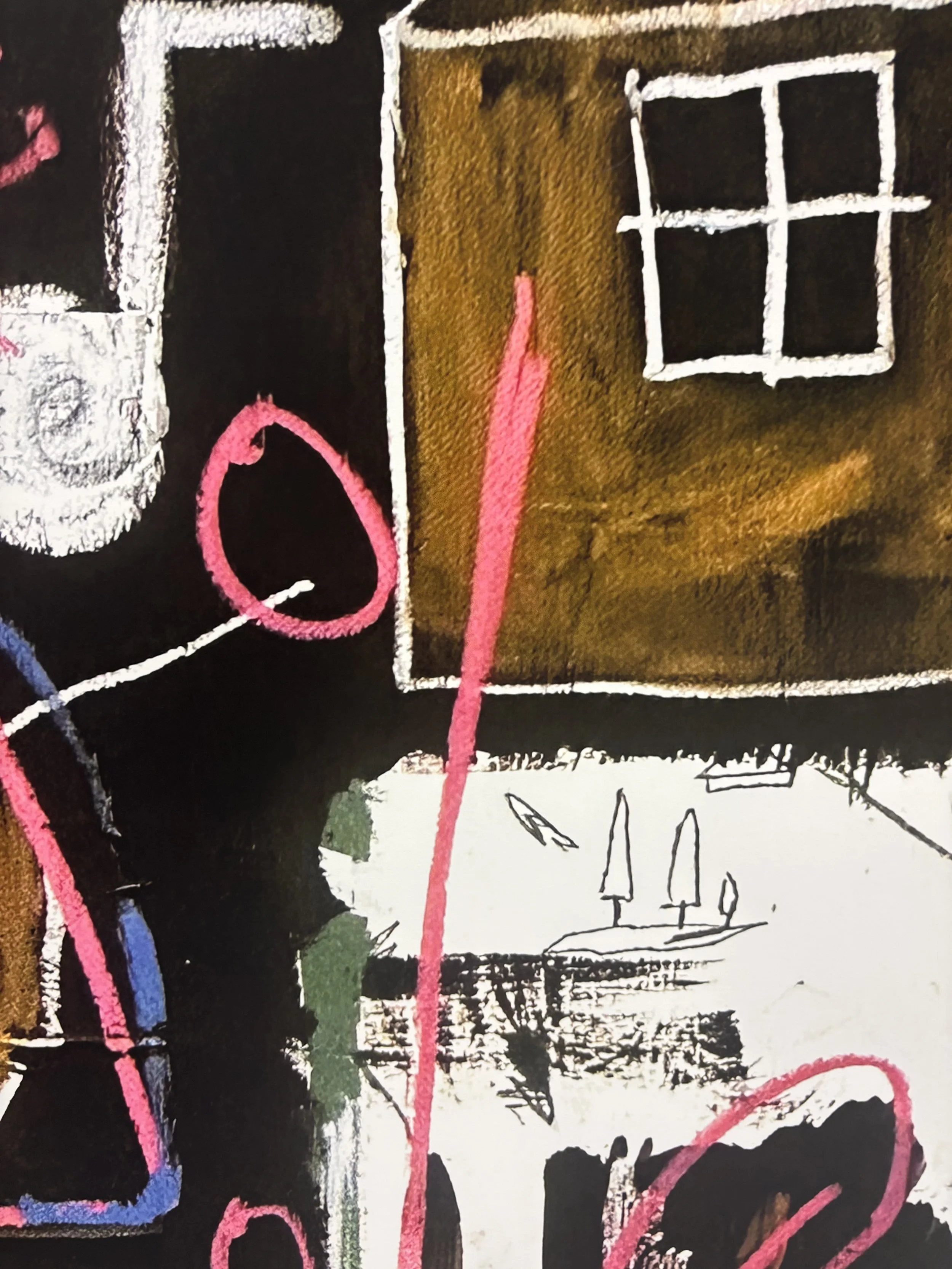
I have been trying to get a handle on Bodil Friele. It hasn’t been easy. Paintings that come alive with colour. Wood used in almost every imaginable form. Words that appear and disappear, sometimes making sense, sometimes not. And, once, an entire woodland turned an improbable turquoise.
I found myself trying to make sense of it all. What connected these different things? Was there a particular idea running through them? Something I was supposed to recognise?
Old habits, I suppose.
I’m told Bodil abhors pretentiousness. Art-speak especially.
An unfortunate discovery for someone like me who has spent four decades in the creative industries, where making relatively simple things sound extraordinarily complicated has become something of a professional accomplishment.
That’s when another question occurred to me. Why was I so determined to find an explanation before I'd even decided what I thought of what I was looking at?
Continue below gallery …
Conversations That Refuse to End
Take her trees.
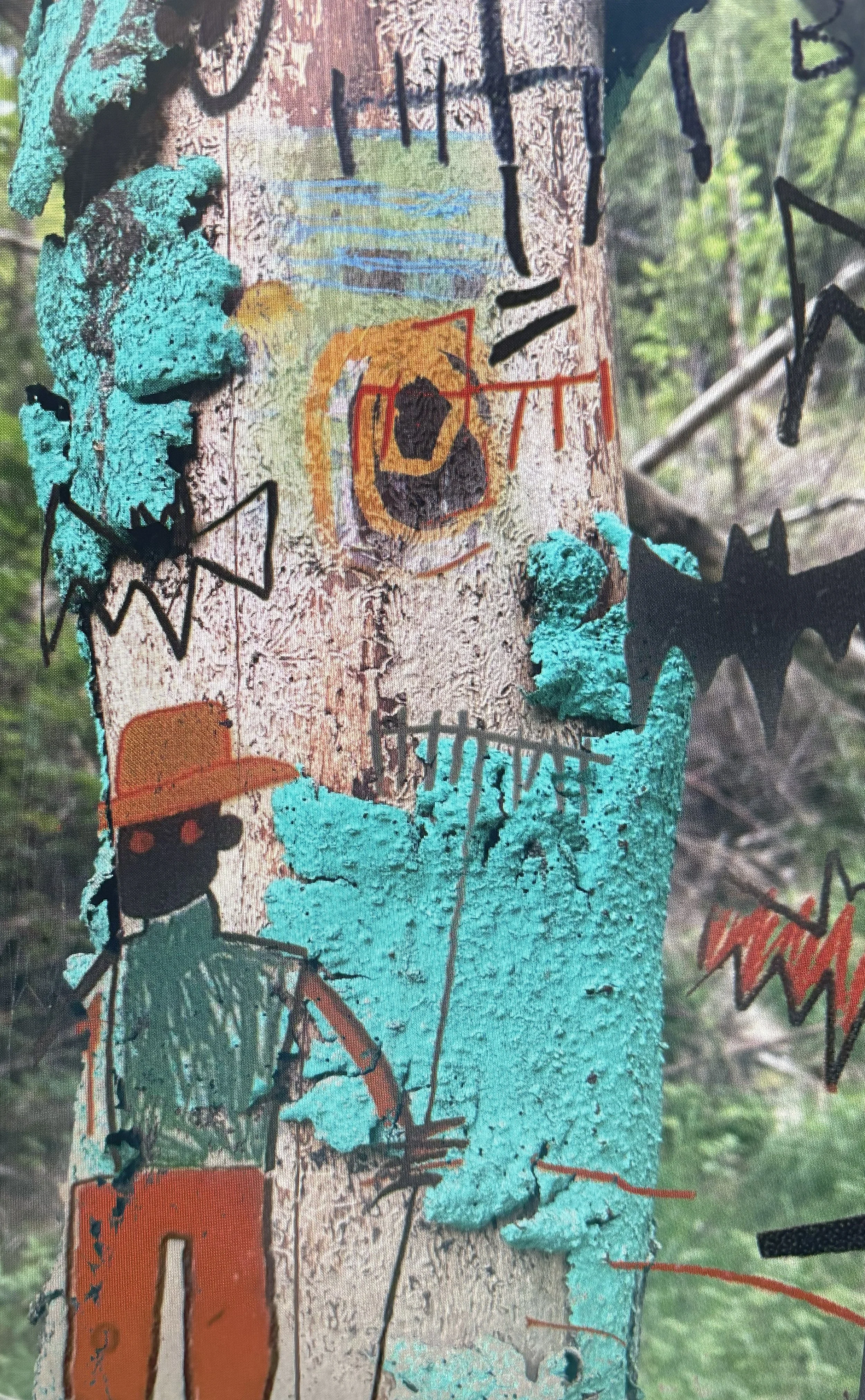
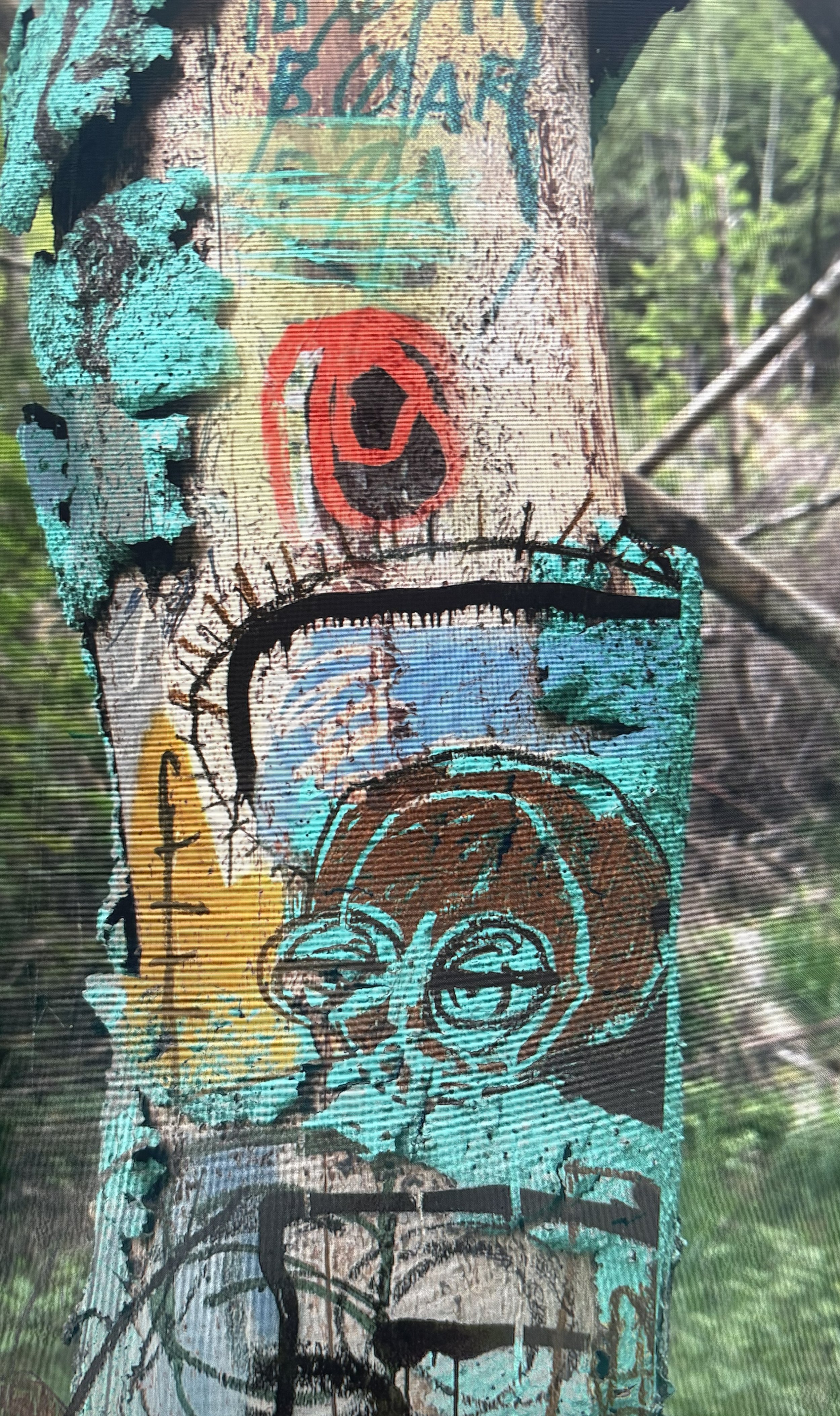
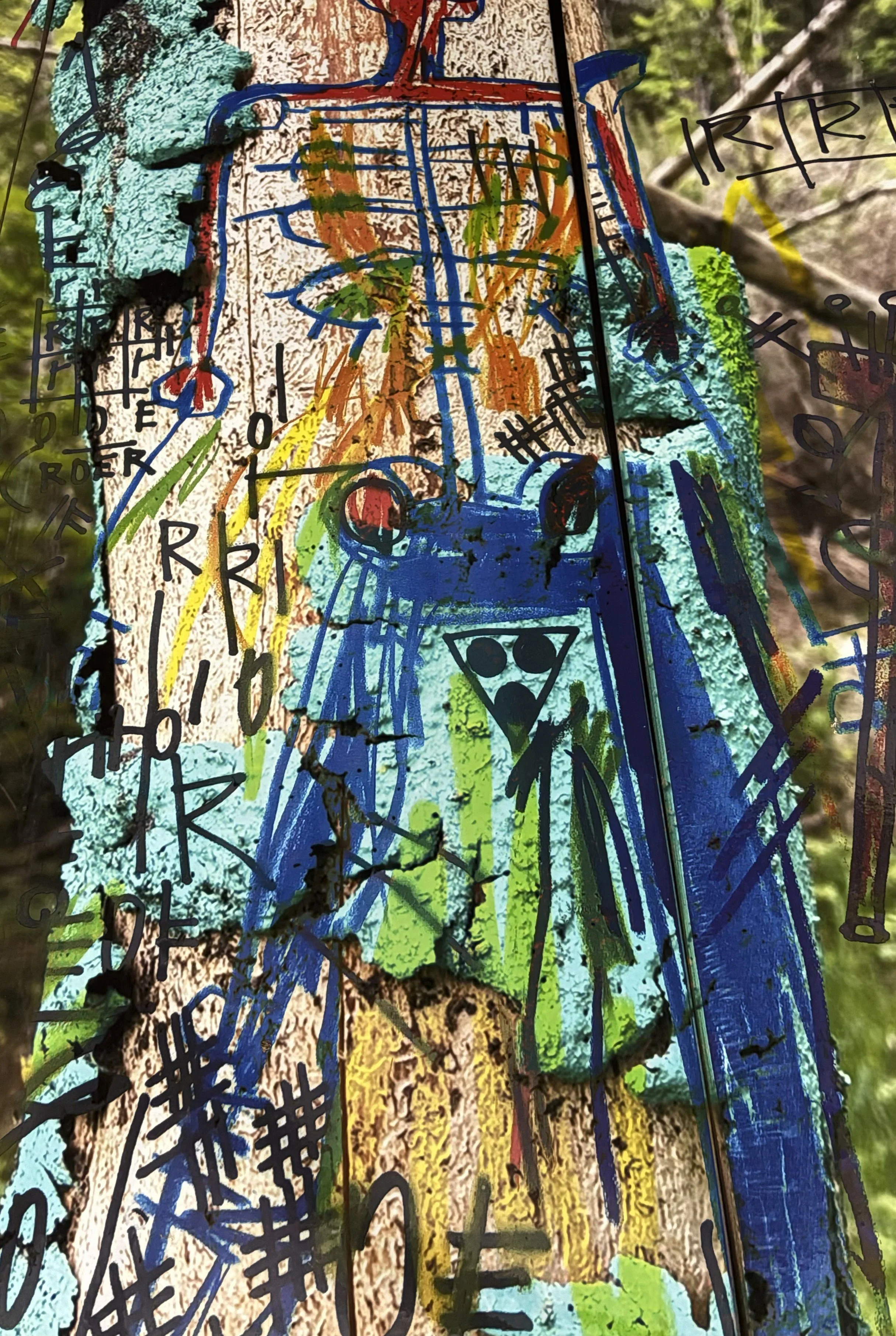
Logs, branches, old poles, weathered timber. Even twigs. Sometimes painted, sometimes rearranged. Sometimes left outdoors for the weather and nature to begin claiming them back. Wood, in one form or another, keeps finding its way into Bodil's art.And those glorious turquoise trunks standing together in a woodland!
Trees are supposed to be green, brown, grey. Colours we hardly give a second thought to. Then Bodil paints them turquoise, and suddenly I'm questioning something I've taken for granted all my life.
Why shouldn't trees be turquoise?
I could think of several explanations. Trees stand through seasons and generations, bearing witness without ever having anything to say about what they've seen. Perhaps painting them was Bodil's way of giving voice to that silence.
Then I caught myself.
Was I responding to what I saw, or had I simply found a more pleasing way to describe it?
For all I knew, Bodil might have chosen turquoise because she liked turquoise. Or because the colour amused her. Or because it did something to the woodland that no other colour could.
I don't know.
What I do know is that those trees unsettled my familiar idea of what a woodland should look like. Something ordinary had become extraordinary, and I was enjoying the disturbance.
Then there are the words that find their way into her work.
Bodil uses text much as she uses wood or paint. Sometimes the words are readable, sometimes barely decipherable. Sometimes they make sense, sometimes they seem to have no particular meaning at all.
And sometimes they tell the most amazing stories.
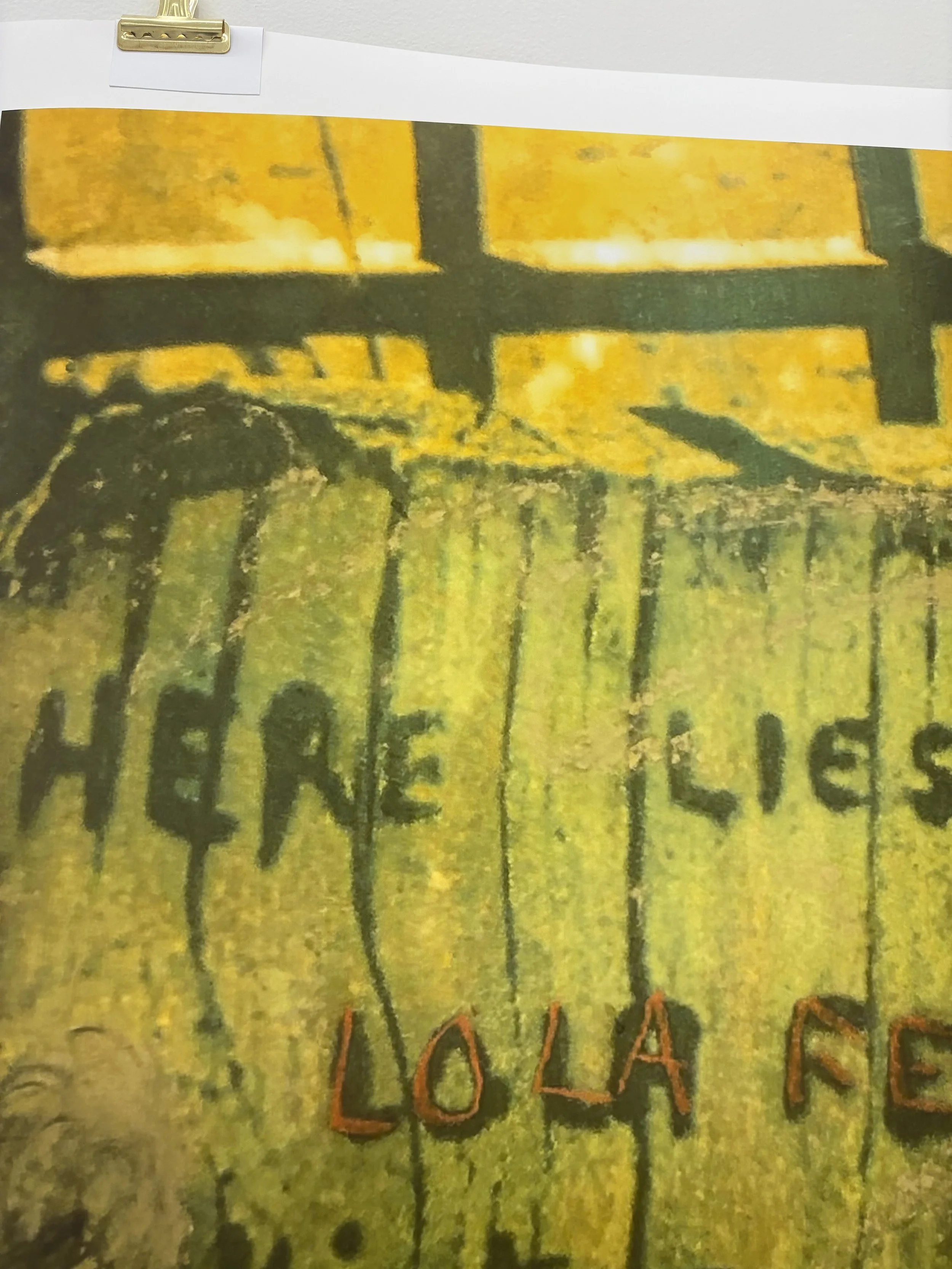
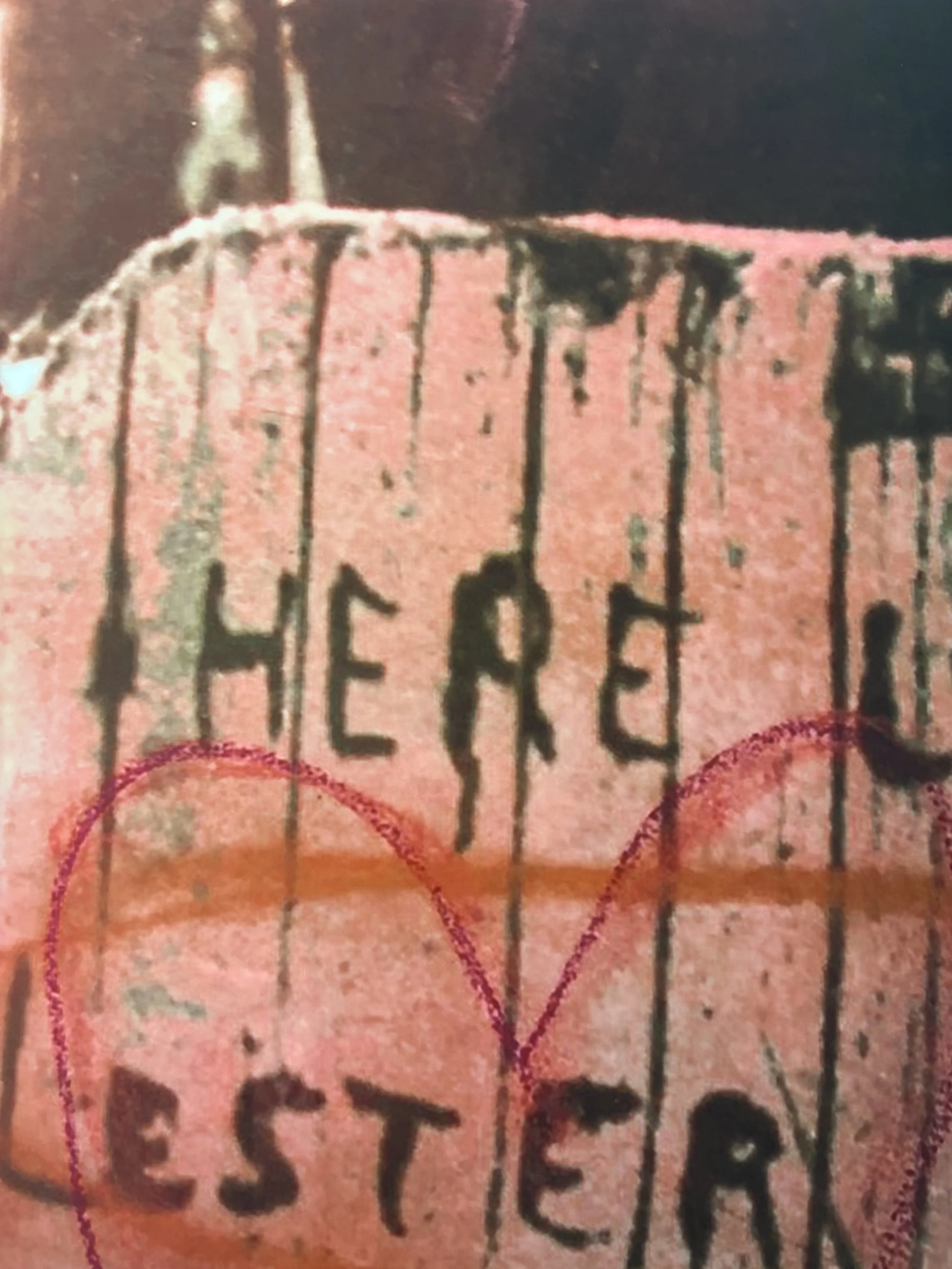
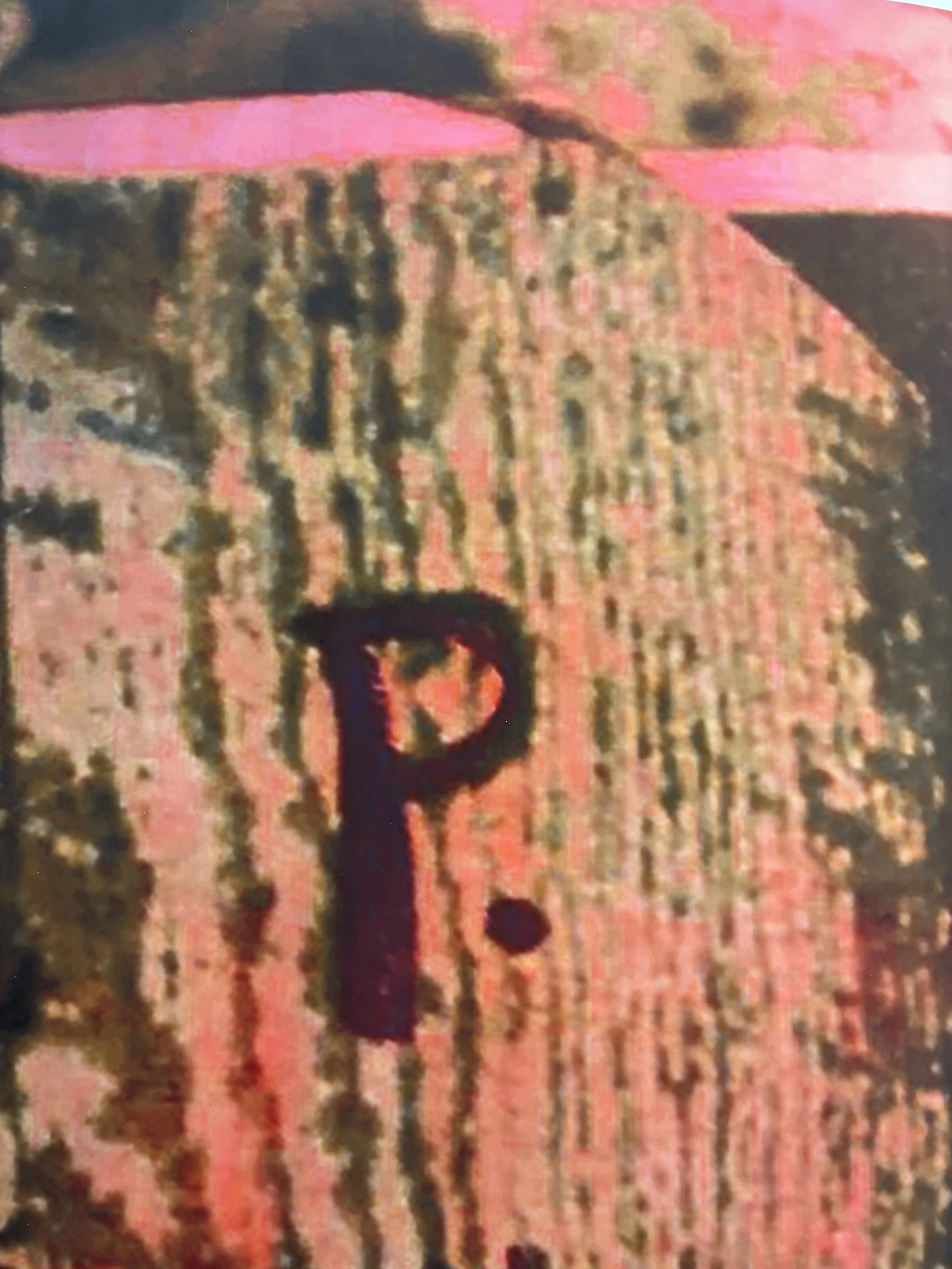
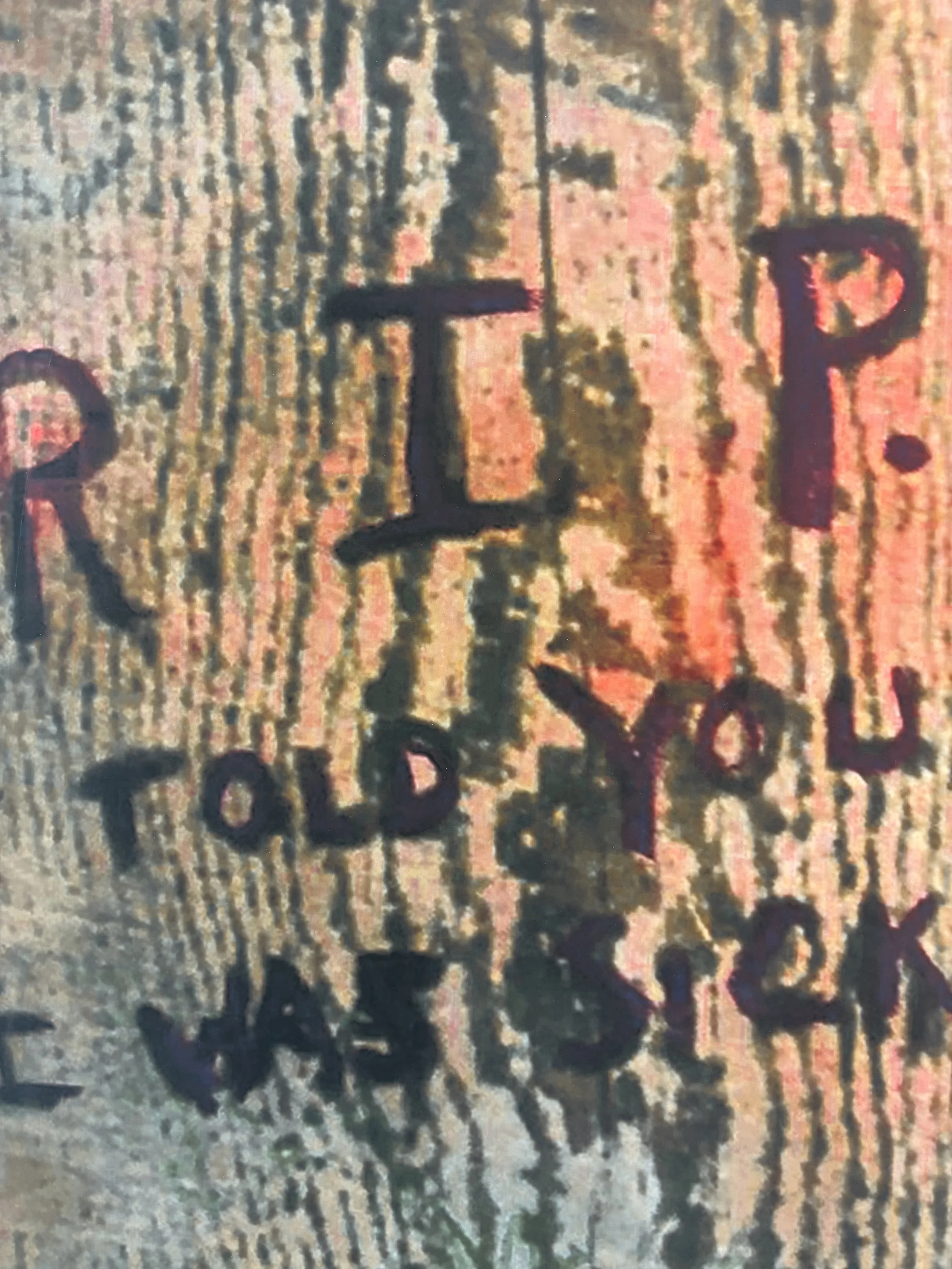
In the Rocky Mountains, Bodil encountered the forgotten graves of sex workers. One of her works carries a wonderfully spirited inscription: “Here lies Lola Rent, kicked up her heels and away she went.” I laughed when I read it.
One can almost imagine Lola delivering the line herself, with a wink and a flourish. But then I began wondering: Who was she? What was her life like? Who wrote those cheeky words, and what did they know about her? I'm now curious about Lola. I know nothing about her. Yet here I am, letting my imagination run away with her. And enjoying myself enormously.
It has also got me to think about the people whose lives have crossed our own.
How well do we really know them? How much of their lives happened before we came along, or remained hidden even when we were there? I find it curious that a few cheeky words about a woman I've never met could leave me wondering how much I really know about the people in my life. It's an uncomfortable thought. One that has little to do with explaining Bodil's art and rather more to do with examining my own assumptions.
There are other conversations with the past.
Her father's wartime diary, discovered after his death, revealed experiences she had never fully known. Bodil's search to understand them eventually became Prisoner of War, a series of paintings and poems.
Although the series isn't part of this exhibition, I can see why she told me about it. It's another glimpse into how the things she encounters, remembers or discovers find their way into her art.
Do we like something because we like it? Or because we're supposed to? It's an uncomfortable question for someone who has spent much of his working life making judgements about creative work. I like to think I know what I'm looking at. Experience must count for something, surely. Yet I wonder how often I've walked into an exhibition carrying expectations I barely noticed. About what deserves admiration. What counts as serious. What an artist ought to be saying.
And how often have I been quicker to find the right words than to work out what I actually felt? That thought is a little embarrassing. Bodil takes her art seriously, by all accounts. What she seems unwilling to indulge is the solemn performance that sometimes surrounds it.
I rather admire that.
The Pleasure of Not Always Needing Answers
I still find myself looking for connections. Between the wood and the paintings, between words and memories, between things she has found and things she has made. I find it fascinating that something picked up from the ground somewhere becomes part of what we see on a canvas. I'm beginning to relish the possibility that not knowing doesn't diminish my enjoyment. And perhaps that's what has surprised me most about these encounters with Bodil's art. They take me in directions I hadn't anticipated. And sometimes I simply like what I see. I've spent much of my life finding words for creative ideas. Perhaps I've sometimes been so occupied with finding the language to appreciate something that I've missed the forest for the trees.
It's a curious admission to make after so many years.
For this exhibition, Bodil is doing some looking back of her own.
She's revisiting themes and earlier works, reinterpreting them through photographic prints and acrylic paintings.
She's approaching them afresh, rather than simply reproducing what existed before. And I wonder whether she sees those earlier works differently now. After all, she's no longer quite the same person who first made them.
I love that idea.
Perhaps that's what Looking Back to Look Forward has come to mean to me. Not simply remembering what has gone before, but discovering that revisiting our past can still surprise us.
And I find myself thinking about Lola again. I wonder what she'd have made of all this attention. I suspect she'd have been even cheekier.
And I would have loved to hear it.
Joseph Lam